Address
Zhejiang University Alumni Enterprise Economic Park, Yuhang District, Hangzhou City, Zhejiang Province
Telephones
+86 13588462888
Address
Zhejiang University Alumni Enterprise Economic Park, Yuhang District, Hangzhou City, Zhejiang Province
Telephones
+86 13588462888

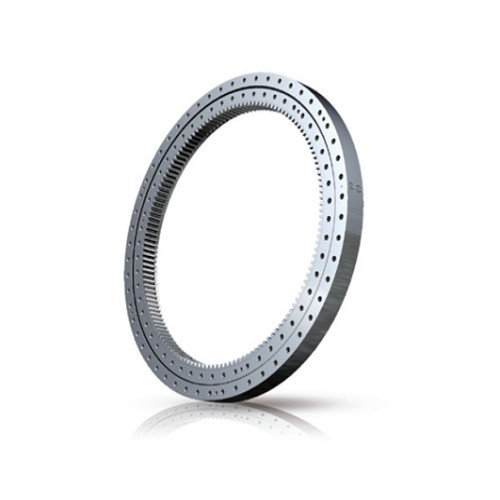
Slewing Bearing (Pitch Circle Bearing): Core Functions
The slewing bearing serves as the core rotational connecting component in large-scale machinery. It integrates three fundamental functions—support, rotation, and load-bearing—into a single, compact unit. This integrated design enables the bearing to simultaneously withstand axial forces, radial forces, and overturning moments, thereby facilitating continuous 360-degree rotational movement between two distinct parts of a machine. By combining these capabilities, the slewing bearing eliminates the need for multiple separate components, streamlining mechanical design and improving overall system reliability.
As a replacement for traditional bearing arrangements, the slewing bearing is ideally suited for operating conditions characterized by heavy loads, low rotational speeds, and high torque requirements. Its robust construction ensures stable and reliable performance even under demanding working environments. The bearing provides consistent rotational support for a wide range of applications—including construction machinery, wind power equipment, port machinery, and medical devices—ensuring the precise rotation and reliable operation of mechanical structures across diverse industries.
The slewing bearing is distinguished by several key attributes. Its compact structure reduces space requirements while maintaining high load capacity. Ease of installation simplifies assembly processes and reduces maintenance complexity. High rigidity ensures minimal deformation under load, while excellent wear resistance contributes to an extended service life. These characteristics collectively enable the slewing bearing to effectively simplify overall machine design while simultaneously enhancing operational stability and safety. As a critical foundational component for enabling rotational motion in heavy machinery, it ensures that equipment continues to operate efficiently and reliably, even under complex working conditions involving fluctuating loads, continuous rotation, and demanding environmental factors.